Showing posts with label SIT. Show all posts

Monday, April 2, 2012

Education in Mali: Here's hoping

As I eagerly wait for twitter updates and Reuter's reports on the constantly shifting and perpetually confusing situations here in Mali, my thoughts become a blur about what is the root of the problem here and what is really going to be done about it.  

Amidst all the craziness that has been the last week and a half of life in Mali, there have been a few constants.  One, of course, is Abdoulaye.  He has kept me calm on days when I have felt crazy and I honestly do not know how many times we have gone over our own contingency plans should I leave Mali earlier than planned.  His patience amazes me and I am thankful for him everyday.  

Another constant is my most wonderfully beautiful group of friends.  From calls to texts to emails and long sessions where we try and talk out what is actually going on around us, it would be impossible to go through this without you.

The last constant is education.  Broad, general, all-encompassing.  For one, I work for an education project and work, at least being present in the office, has gone on (except for the first few days i.e. March 22nd/23rd).  Another kind of education is the formal one in which I am participating at a distance through SIT.  Papers and presentations continue to be due and meetings with other students continue to take place via Skype and emails.  Life cannot be on hold forever.  As I think of all the issues that Mali faces, and even the ones that I do, one thing is clear– the importance of a continued and an improved education.      

Two of my friends, Manzo and Bakary, are proficient English speakers.  Manzo works for World Vision in Koro (he was actually evacuated to Burkina Faso today...) and Bakary is an English and German student in Bamako who I met at Abdoulaye's computer center.  Manzo recently completed an application for the 2013 Fulbright Francophone/Lusophone Junior Staff Development Program (FLJSD).  He is hoping to pursue a Master's degree in international development in the U.S.  Here's a blurb on the FLJSD program from the US Embassy in Mali website:
"funds two years of higher education in the United States, leading to a Master’s degree.  It differs from the FJSD program (described above) in that it requires a TOEFL score of 480-540 and includes intensive English language training prior to the academic program.  For preliminary application purposes, candidates may submit ALIGU scores in lieu of TOEFL.* Upon completion of the English language training program, the candidates will then sit for the GRE  in the United States and must attain required scores."

Bakary was recently selected – one of four Malians! - to participate in a Study of the United States Institutes (SUSI) for Student Leaders forum focused on Social Entrepreneurship to take place this summer.  Get in touch with your local American embassy if you know a student you think would qualify for this scholarship (details found in link).  The process starts in the fall so you can get a head start now and find out more information.

The forum will explore the following topics:
This institute provides participants with an overview of how to employ business techniques and entrepreneurial skills to address social issues. The institute reviews the development, history, challenges and successes of social enterprises and community leaders in the United States and around the world. Students examine topics such as microfinance; organizational development and management; grant writing; innovation; emerging markets and risk analysis; strategic business planning; corporate social responsibility; and women and minorities in entrepreneurship.

I am hopeful that Mali will see the beginning of a resolution to all of the instability it currently faces – and soon.  I am also confident that the answers to Mali's problems, and subsequent - sustainable - solutions, will come from Malians who are implicated and invested in the decision-making process.  People like Manzo and Bakary are inspirations to me and show me the true value of education.  Come on, Mali!

PS - these videos really are great!  I was able to download them - can't wait to see/hear more.

Monday, February 13, 2012

On my way!

I am on the train (my last ride for this trip/extended stay in the US) and heading back to Virginia Beach after three weeks spent in Boston and Vermont.  My two weeks on campus at SIT were delightful - even if they were a bit exhausting - and I am excited to get started on my course work and for the rolls of graduate school to finally be turning.

There is a lot going through my mind right now as I prepare to step into the next 'stage' of my life.  As a recently engaged graduate student picking back up with USAID/PHARE via Peace Corps Response and with some other things on the back burner - I have a few things to think about!  (then again, who doesn't?)

And while my own concerns are often in my mind's foreground - Mali's civil unrest has also made its way to the front of the queue (read more news about the Tuareg rebellion here).  I have recently begun to follow a few blogs which I would like to share here since they are exactly what I have been looking for - thoughtful, well-rounded accounts of what is actually happening in Mali (and Africa) rather than abstract news articles that feel a little colder. 

Africa is a Country features a wide range of topics concerning Africa - music, politics, culture and sports.  I am excited to learn more about other countries through these lenses rather than a strictly political/NGO perspective.  Monthly Development Magazine provides "in-depth news and commentary on global trends that affect relief, refugee and development work."  Some of their recent articles have touched close to home for me with my current school and work situations.  Check out these articles about SIT in Rwanda, World Learning's partnership with USAID and taking learning out of the schoolroom.  I also fell upon the African Studies Association website which will be a great resource when I begin more focused research in Mali. 

I am grateful to Alex Thurston, a Ph.D candidate in Islam in Africa, and his Sahel Blog which linked me to a couple of the sites I listed above.  Definitely not a site to be missed if you are interested in the Sahel region!

God willing I will return to Mali in one week (yay!  I finally heard from Peace Corps that my ticket is en route!) and pick back up where I left off in October.  There are so many people I am looking forward to seeing (you know who are - I won't list you since I'm afraid I'd accidentally leave someone off!) and things to do.  I am refreshed from my time home and ready to get back to work.  I will get back on the wagon with my Africa from A-Z series and hopefully add a few new features to the blog once I get settled back in Mali - though who knows how long that will take! 

Thanks for reading!  Is there anything on your mind these days?  Do you have any other blog suggestions? 

Monday, February 6, 2012

Talking 'bout people: SIT Master of Arts in International Education (Low-Residency)

Image source
Adam Weinberg, President and CEO of World Learning - SIT Graduate Institute's parent organization - dropped in on one of our classes last week to speak to the most recent cohort of Low-Residency International Education Students.  When my professor said he would be coming by my first thought was 'Wow, we must be important if the CEO is coming to see us!' 

And I get it, we are putting forth money - and not a small amount - for our graduate education.  Nonetheless, I appreciated hearing from someone so high up in the chain of command and his perspective on the field I am pursuing.  His visit to our class made me feel better about the investment me and my family are making in my education.

He proved to not only make an impression on me with his visit but also with his words.  After a brief introduction noting some of his significant achievements at World Learning, Dr. Weinberg made a high impact speech in a short amount of time.  I will bullet here his speech:
  • He congratulated us on being wonderful students and contributors to the international education field (a little flattery never hurt anyone :)
  • He welcomed us to SIT and likened the school and the international education field to Hotel California.  You can check out whenever you like - but you can never leave.  (I think there are worse places to be stuck.)
  • He said education reaches its peak with phenomenal faculty - something he strongly feels SIT possesses. 
And then he concluded with two points:
  • International education has the best hope for our generation for creating solutions to the problems our countries face.  (OK, let's get to it!) 
  • Then he challenged us to think about the direction of international education.  Is it really a good thing, he asked, that we are - at this moment - unleashing 40,000 undergraduates on cities like Florence, Italy for study abroad programs?  What is the best direction for international education?
I appreciated his brevity and also the food he gave us all for thought.  While I have a few ideas cooking for how I would like to maintain a presence in the international education field before and after I receive my master's, it is inspiring to be surrounded by so many students, educators, and leaders who are pushing me to ask new questions and look at the old ones from a new perspective.

With the low-residency program at SIT, we spend two weeks on campus during our first year establishing rapport amongst students and faculty while taking introduction courses to our first classes.  After those first two weeks we return home where everyone is either working or volunteering in the field of international education.  Then, much of our work consists around reflecting on, and learning from, our shared experiences in the field while we simultaneously take courses on theory, practice, and policy as well as research-based courses.  I continue to be impressed by the diverse experiences and paths my classmates have had and taken and so I wanted to compile a list of some of the organizations with whom they work.  After checking out their websites I am even more excited to learn more from my cohort and the field of international education:

Reboot workshop - helping veterans transition into civilian life.
U.S. Citizen and Immigration Services
SIT Study Abroad
Lewis & Clark Study Abroad
International Student Services at Franklin University
University of Wisconsin Study Abroad Office
World Endeavors Study Abroad (site and blog)
Humboldt University Study Abroad Office
Growing Hope - A VISTA program
AFS Study Abroad
World Learning.  Bridging Cultures.  Transforming Lives.
International Student Volunteers.

Second year graduate students have not yet come back to campus but first-year students are here and excited to have us low-residency folks (or so it seems!) around.  One of the components I appreciate about our program is the emphasis on recruiting qualified international students to campus.  So far, from my program and the on campus program, I have met students from, or with families from, the following countries - not to mention all over the United States!:
Tajikistan, Uzbekistan, Kazakhstan, Senegal, Kenya, Zimbabwe, Egypt, Haiti, Ghana, and Eritrea

And there are only about 75 students on campus!  I am looking forward to week two of our seminars and getting a bigger glimpse of what this adventure is all about!

Have you ever done an online degree program?  Had you ever heard of SIT/World Learning before?

Wednesday, February 1, 2012

Gemstones of International Education in Brattleboro, VT

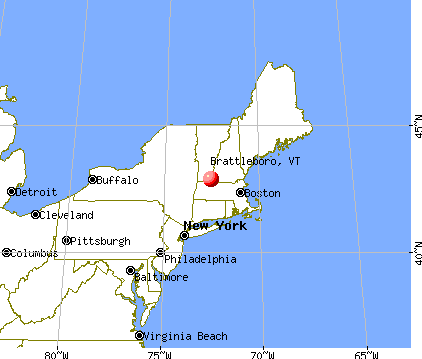
I like how this map shows the most important cities. Go VB!
After driving three hours northeast of Boston and carefully navigating small, country towns and gas stations equipped with bathrooms of questionable quality, Suzy and I made it to Brattleboro, Vermont.  Tucked away in a mountainside with a main street of cute shops, the city bustles with weekend visitors and seasoned locals shopping and grabbing a bite to eat at one of the many restaurants in town.

We peek into the local farmer's market and I find myself drooling over tables laden with homemade savory & sweet treats.  Rosy cheeked women with kind eyes and rough, textured hair and a unique piece or two of silver jewelry stand behind tables and invite us to try local breads and jams, syrup tapped from Vermont maple trees and to hold for ourselves hand-knit hats made from local sheep's wool.  Places like this make me want to sell my computer (or yours) and move to a farm and wear hand-knit sweaters while making lavender infused goat-milk lotion and soap.  One day.

Orientation began Saturday night with a group dinner for myself and the rest of my cohort (the 17 other folks who will complete their Master of Arts in International Education low-residency style along with me).  Dinner was a delight and our immediate sharing of experiences showed me what a breadth of diversity our group brings to the table.  With backgrounds spanning the globe and languages to match them, I know I have a lot to learn from my fellow students and I also look forward to sharing, and learning from, my experiences in Mali along the way.

We will spend two weeks together this January/February exploring the field of international education while laying the foundations for the courses to follow this Spring.  Our first two classes are Foundations of Intercultural Service, Leadership & Management and Practitioner's Inquiry.  I will also take a workshop this weekend entitled 'Data-driven Decision-Making' which looks to be quite interesting.  After meeting with my adviser I feel more confident about undertaking this degree and reassured that it is something that will help me along my path (be it on a goat farm in rural Vermont or in a study abroad program at a university or otherwise!

One of our professors asked us what made gemstones special.  "Their rarity?"  I ventured.  "Their colors?" said another.  "Yes and no," he replied.  "I believe it is their multi-faceted nature that makes them special.  Their ability to refract light and shine in different ways in different settings."  He went on to note that our unique abilities and experiences are what make us distinct, too and if we can harness our ability to communicate those abilities and experiences our time with SIT will be that much richer.  I appreciate the analogy and look forward to all the refracting that will be going on!
Add caption
Who knew International Education could look this good?
Here are some of the hot spots around town I've heard are must-dos (I've already gotten to do some!):
Have you ever been to Brattleboro?  Do you have any Vermont favorites?
Related Posts Plugin for WordPress, Blogger...